Gyan
DIVINE JYOTISH VAIBHAV
Vedic & KP Astrology · Numerology · Chakra Sādhanā
The Seven Chakras
A Practitioner’s Guide to the Sapta Chakra — Their Traditional Descriptions, Bīja Mantras, and the Modern Frequency Systems
This guide accompanies the Sapta Chakra Sādhanā practice tool. It sets out what the classical sources actually describe for each of the seven centres, how to practise with the bīja mantras and the breath, and — since the question comes up constantly and is usually answered badly — where the various "chakra frequency" systems come from and how much weight each deserves.
I. Where the Chakra System Comes From
The word cakra means "wheel" or "disc". In the yogic and tantric traditions it refers to a centre of subtle energy located along the suṣumnā nāḍī, the central channel that runs from the base of the spine to the crown of the head. These centres are not anatomical organs. They are described in the source texts both as objects of meditative visualisation and as real features of the subtle body — and the traditions themselves do not always draw a sharp line between the two.
It is worth being precise about the history, because a great deal of modern writing is not. References to nāḍīs, prāṇa and subtle energy points appear in the earlier Upaniṣads and yoga texts. But the standardised seven-chakra system as it is known today — with these particular petal counts, elements, deities and seed syllables — is a development of medieval tantra. Before that, different schools counted the centres differently: four, six, nine, twelve or twenty-one, placed at different points.
The principal source
The single most influential text is the Ṣaṭ-Cakra-Nirūpaṇa ("An Examination of the Six Centres"), composed by Pūrṇānanda Svāmī in 1577 CE. It describes each chakra in detail: its location, its lotus and petal count, the Sanskrit letters carried on the petals, the presiding deity and śakti, the elemental yantra, and the bīja mantra. It became known in the West through Sir John Woodroffe’s early-twentieth-century translation, published under the pen name Arthur Avalon as The Serpent Power.
A structural detail worth knowing: the fifty petals of the lower six chakras carry, between them, the fifty letters of the Sanskrit alphabet — each letter representing a nāḍī converging at that centre. The thousand petals of the crown are those fifty repeated twenty times. The petal counts are not decorative numbers; they encode a scheme.
What the tradition specifies — and what it does not
For each chakra the classical sources give: a location, an element, a lotus with a fixed number of petals, a colour, a geometric yantra, presiding deities, and a bīja (seed) mantra. This guide reproduces all of these.
What the sources do not give is a frequency in hertz. They could not have: the hertz was not defined as a unit until the nineteenth century, and the means to measure a pitch precisely did not exist when these texts were written. Every "chakra frequency" chart in circulation today is a modern overlay. That does not make such charts useless — but it does mean they should not be presented as ancient, and Part III of this guide sets out honestly where each one actually comes from.
II. The Seven Chakras in Detail
Each entry below gives the traditional attributes first, then the qualities associated with the centre when it is settled and when it is not, and finally practical notes for working with it. The descriptions of "balance" and "disturbance" are the traditional and experiential ones; they are not diagnostic categories and should not be read as such.
1. Mūlādhāra — Root Chakra
Mūla means "root"; ādhāra means "support" or "base" — literally, the root support.
Attribute | Description |
|---|---|
Bīja mantra | लं (laṃ) |
Location | Base of the spine, at the perineum / pelvic floor |
Element | Earth (Pṛthvī) |
Petals | 4 |
Colour | Deep red |
Yantra | Yellow square, containing a downward-pointing triangle |
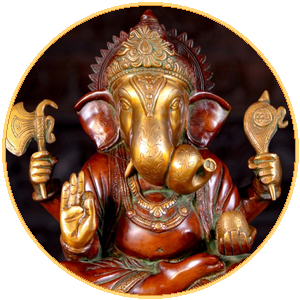
Presiding deities | Ganesha; Shakti Dākinī |
When settled
Physical vitality, a settled nervous system, patience, the felt sense of being safe in one’s own body and of belonging somewhere.
When disturbed
In the traditional descriptions, restlessness, chronic anxiety about survival and money, feeling ungrounded or "not really here", and a general lack of physical steadiness.
Practice notes
Sit with the sitting bones firmly supported. Bring attention to the point of contact between the body and the ground, and let each exhalation feel as though weight is being released downward into it. Chant laṃ on the exhale, feeling the vibration low in the pelvis. Traditionally practised at dawn, facing east, with unhurried breath.
2. Svādhiṣṭhāna — Sacral Chakra
Sva means "one’s own"; adhiṣṭhāna means "dwelling place" — the seat of the self.
Attribute | Description |
|---|---|
Bīja mantra | वं (vaṃ) |
Location | Lower abdomen, roughly two finger-widths below the navel |
Element | Water (Ap) |
Petals | 6 |
Colour | Orange / vermilion |
Yantra | White crescent moon within a circle |
Presiding deities | Brahmā and Sarasvatī; Shakti Rākinī |
When settled
Creative flow, healthy pleasure, emotional fluidity, comfortable intimacy, and the ability to adapt when circumstances change.
When disturbed
Traditionally associated with emotional rigidity or, at the other extreme, being swept about by every feeling; creative blockage; either numbness toward pleasure or compulsive pursuit of it.
Practice notes
Rest a hand below the navel and let the belly move freely with the breath — this centre is described as fluid, so any holding in the abdomen works against it. Chant vaṃ on the exhale, and visualise a slow, unhurried current of water rather than a still image.
3. Maṇipūra — Solar Plexus Chakra
Maṇi means "jewel"; pūra means "city" — the city of jewels, named for its radiance.
Attribute | Description |
|---|---|
Bīja mantra | रं (raṃ) |
Location | At the navel / solar plexus |
Element | Fire (Agni) |
Petals | 10 |
Colour | Bright yellow |
Yantra | Downward-pointing red triangle |
Presiding deities | Rudra and Lākinī |
When settled
Clear will, self-confidence without arrogance, decisiveness, digestive fire (agni) in the Ayurvedic sense, and the capacity to convert intention into completed action.
When disturbed
Described traditionally as either domineering forcefulness or its opposite — chronic indecision, difficulty asserting oneself, and a sense that plans never quite convert into action.
Practice notes
Sit tall so the abdomen is neither slumped nor braced. Chant raṃ on the exhale with a little more force than the lower two centres, feeling the vibration at the navel. This is the centre most associated with the classical fire practices, so it responds well to a firm, rhythmic pranayama rather than a very soft one.
4. Anāhata — Heart Chakra
Anāhata means "unstruck" — from anāhata nāda, the sound that arises without two things striking together; the uncaused sound.
Attribute | Description |
|---|---|
Bīja mantra | यं (yaṃ) |
Location | Centre of the chest, at the level of the heart |
Element | Air (Vāyu) |
Petals | 12 |
Colour | Green (in some lineages, smoke-grey or golden) |
Yantra | Two interlocking triangles forming a six-pointed star |
Presiding deities | Īśa and Kākinī |
When settled
Compassion that includes oneself, the ability to give and receive without accounting, equanimity, and a sense of connection that does not depend on circumstances.
When disturbed
Traditionally, either a closed and defended quality — difficulty trusting, holding grievances — or an unboundaried one, giving past the point of depletion.
Practice notes
This is the pivot of the whole system: the three centres below concern the personal self, the three above concern what lies beyond it. Chant yaṃ on the exhale, attention in the middle of the chest rather than at the physical heart on the left. Many lineages hold this as the most important centre for a householder’s daily practice.
5. Viśuddha — Throat Chakra
Viśuddha means "especially pure" — the centre of purification.
Attribute | Description |
|---|---|
Bīja mantra | हं (haṃ) |
Location | At the throat, at the level of the vocal cords |
Element | Ether / Space (Ākāśa) |
Petals | 16 |
Colour | Sky blue / smoky purple |
Yantra | White circle within a downward triangle |
Presiding deities | Sadāśiva and Śākinī |
When settled
Truthful speech, the ability to listen as well as speak, clear expression of what is actually meant, and comfort with silence.
When disturbed
Described as difficulty saying what one means — either speaking too much and revealing little, or holding words back until they harden into resentment.
Practice notes
Let the chin be very slightly drawn in and the throat soft rather than gripped. Chant haṃ on the exhale, feeling the vibration in the throat itself — this is the centre where the audible and the inaudible meet, so it is well suited to alternating spoken and silent repetition of the same syllable.
6. Ājñā — Third Eye Chakra
Ājñā means "command" or "perceiving" — the centre where the guru’s instruction is received inwardly.
Attribute | Description |
|---|---|
Bīja mantra | ॐ (oṃ) — क्षं (kṣaṃ) in some lineages |
Location | Between and slightly above the eyebrows |
Element | Mind / Light (beyond the five gross elements) |
Petals | 2 |
Colour | Indigo / translucent white |
Yantra | Downward triangle within a circle, flanked by two petals |
Presiding deities | Paramaśiva and Hākinī |
When settled
Discernment, intuition that can be distinguished from wishful thinking, mental clarity, and the ability to see a situation whole rather than in fragments.
When disturbed
Traditionally, either a dulled, literal-minded quality that sees only surfaces, or an over-active one — vivid imagination mistaken for insight.
Practice notes
Sit with the eyes closed and attention resting lightly at the point between the brows, without straining the eyes upward, which causes headache. Chant oṃ on the exhale. Here the two petals are said to represent the merging of iḍā and piṅgalā — the two side channels — into the central suṣumnā.
7. Sahasrāra — Crown Chakra
Sahasra means "thousand" — the thousand-petalled.
Attribute | Description |
|---|---|
Bīja mantra | ॐ (oṃ), or held in silence |
Location | At or just above the crown of the head |
Element | Beyond the elements |
Petals | One thousand |
Colour | Violet, or pure luminous white |
Yantra | The thousand-petalled lotus |
Presiding deities | Not a deity but the union of Śiva and Śakti |
When settled
Traditionally described less as a state to be achieved than as what remains when the other six are settled: awareness without a centre, and the dissolving of the sense of separateness.
When disturbed
The classical texts do not speak of this centre in terms of blockage in the way they do the lower six; it is described as either open or dormant.
Practice notes
Most traditions advise that this centre is not to be worked on directly. The practice is to establish the six below it and let this one open of its own accord. Sit in silence, or with oṃ so soft it is barely sounded, and make no attempt to feel anything in particular at the crown.
III. On Chakra Frequencies — An Honest Account
Search for "chakra frequencies" and you will find, repeated across thousands of pages with total confidence, that the root chakra resonates at 396 Hz, the sacral at 417 Hz, and so on. These numbers are usually described as ancient, sacred, or Vedic. They are none of those things. What follows is where they actually come from.
System 1 — Solfeggio (396–963 Hz)
This is the set most widely used today, and the default in our practice tool. Its origin is well documented and recent. In the mid-1970s, Joseph Puleo, a naturopath, applied a numerological technique called Pythagorean reduction to verses 12 to 83 of Chapter 7 of the Book of Numbers in the King James Bible, and derived six repeating three-digit patterns: 396, 417, 528, 639, 741 and 852. He treated these numbers as frequencies. The set was popularised by Leonard Horowitz in the 1999 book Healing Codes for the Biological Apocalypse. Three further tones — 174, 285 and 963 Hz — were added later by others; 963 is the one now assigned to the crown chakra.
Two things follow. First, the derivation is Biblical numerology, not Indian tradition — there is no historical connection between these numbers and the chakra system at all; the pairing of the two is a later marketing convenience. Second, the name is borrowed. The medieval solfège syllables (ut, re, mi, fa, sol, la) devised by Guido d’Arezzo around 1000 CE are genuine music history, but the specific hertz values of the modern "Solfeggio" set were never used by medieval singers, and musicologists note that the intervals between them do not even reproduce the scale Guido taught.
System 2 — Planetary tones, the Cosmic Octave (Cousto)
In 1978 the Swiss mathematician and musicologist Hans Cousto proposed that the orbital and rotational periods of astronomical bodies could be transposed into audible pitch by repeated octave doubling. The Earth’s year of about 365.25 days, doubled through thirty-two octaves, gives 136.10 Hz — the tone often marketed as the "Om frequency", and close to the C sharp that many tanpura players tune toward. The Earth’s synodic day gives 194.18 Hz, the synodic month 210.42 Hz, and so on.
Cousto assigned seven of these to the chakras. This system is also modern, but it differs from the Solfeggio set in an important respect: the arithmetic is transparent and checkable. Whether the planetary period of Venus has anything to do with the ājñā chakra is a metaphysical claim one may accept or not — but the number 221.23 Hz is at least derived from something real by a stated method, rather than from digit-summing scripture. The Cousto tones are also considerably lower and warmer in character than the Solfeggio set.
System 3 — The Western musical scale
The simplest convention of all: assign the seven chakras to the seven notes of the C major scale — C, D, E, F, G, A, B — in standard A = 440 Hz tuning. This makes no historical claim whatsoever. It is a purely musical mapping, and its honesty is its appeal: a rising scale from root to crown sounds coherent because it is a scale, not because of any hidden resonance.
System 4 — Mantra only, no tone
The fourth option is to use no fixed pitch at all: chant the bīja mantra at whatever pitch is natural to your own voice, and let the breath and the syllable do the work. This is closest to what the classical texts actually prescribe, since they specify the syllable, the location and the visualisation, and are silent about frequency. It is also the option that removes any dependence on a device.
The four systems side by side
Chakra | Bīja | Solfeggio | Cousto planetary | C-major scale | Mantra only |
|---|---|---|---|---|---|
Mūlādhāra | लं laṃ | 396 Hz | 194.18 Hz — Earth day | C 261.63 Hz | Own voice |
Svādhiṣṭhāna | वं vaṃ | 417 Hz | 210.42 Hz — synodic Moon | D 293.66 Hz | Own voice |
Maṇipūra | रं raṃ | 528 Hz | 126.22 Hz — Sun | E 329.63 Hz | Own voice |
Anāhata | यं yaṃ | 639 Hz | 136.10 Hz — Earth year (Om) | F 349.23 Hz | Own voice |
Viśuddha | हं haṃ | 741 Hz | 141.27 Hz — Mercury | G 392.00 Hz | Own voice |
Ājñā | ॐ oṃ | 852 Hz | 221.23 Hz — Venus | A 440.00 Hz | Own voice |
Sahasrāra | ॐ oṃ | 963 Hz | 172.06 Hz — Platonic year | B 493.88 Hz | Silence |
What the evidence supports
There is no controlled evidence that any particular frequency acts on any particular chakra. Research on mantra-based meditation and on slow, attentive breathing does show measurable effects — reduced physiological stress markers, slower heart rate, improved emotional regulation — but these are generally attributed to the breath, the rhythm and the sustained attention, not to the numerical value of a pitch. The tone in a practice like this is best understood the way a tanpura drone or a temple bell is understood: an anchor that gives wandering attention something to return to. That is a real and valuable function. It is simply not the same claim as "this frequency repairs the root chakra".
Our position, and why the default is what it is
The Sapta Chakra Sādhanā tool offers all four systems and defaults to Solfeggio, because that is the set most practitioners arrive expecting. But the tool states plainly, on the page itself, that this set is modern and where it came from — and it lets anyone switch to the planetary tones, the musical scale, or to mantra alone with no drone at all. The bīja mantras, elements, petal counts and locations it teaches are the traditional ones, and those are the part of this practice that genuinely carries five centuries of transmission behind it.
IV. How to Practise
Combining the bīja mantra with prāṇāyāma
The classical breath cycle has four phases, and the mantra has a traditional place within it:
- Pūraka — the inhalation, drawn in gently through the nose, attention rising toward the chosen centre.
- Antara kumbhaka — retention with the lungs full; attention rests on the chakra, its colour and its yantra.
- Rechaka — the exhalation, slower and longer than the inhalation. This is where the bīja mantra is chanted, aloud or silently, carried out on the breath.
- Bāhya kumbhaka — a brief pause with the lungs empty, before the next cycle begins.
Chanting on the exhalation rather than continuously is the traditional placement, and it has a practical logic as well: an exhalation longer than the inhalation settles the nervous system, whereas the reverse tends to stimulate it.
Choosing a ratio
Rhythm | Ratio | Who it suits |
|---|---|---|
Samavṛtti | 4 : 4 : 4 : 4 | Equal on every phase. The standard, gentle starting point, and appropriate for daily practice indefinitely. |
Extended exhale | 4 : 2 : 6 : 2 | A short retention with a longer exhalation. A good next step once samavṛtti feels effortless. |
Classical | 1 : 4 : 2 (4 : 16 : 8) | The ratio named in the Haṭha Yoga Pradīpikā. Advanced — reached gradually over months, ideally under a teacher, never forced. |
No retention | 4 : 0 : 6 : 0 | Inhalation and exhalation only. The appropriate choice for anyone who should not hold the breath (see below). |
A sequence for daily practice
- Sit with the spine upright but not rigid, at the same time each day if possible. Early morning is traditional.
- Take a few unhurried breaths without counting, simply letting the body settle.
- Begin at Mūlādhāra. Bring attention to its location, its colour, and its element. Chant laṃ on each exhalation for the time you have set — two minutes is ample to begin with.
- Move upward through the centres in order, one at a time. Do not skip a centre to reach a "higher" one; the tradition is emphatic that the sequence matters.
- At Sahasrāra, stop chanting and simply sit. Make no effort to feel anything.
- Close by sitting quietly for a minute before opening the eyes. Rising immediately undoes much of the settling.
A complete root-to-crown round at two minutes per centre takes about fifteen minutes. A single centre worked for fifteen minutes is an equally valid practice — and if one centre is your focus for a season, that is closer to how the tradition was actually taught than a nightly tour of all seven.
Safety
Breath retention (kumbhaka) is not appropriate for everyone. Do not hold the breath, and use the no-retention rhythm instead, if you are pregnant, or have high or low blood pressure, a heart condition, glaucoma, epilepsy, or a tendency to dizziness. If at any point you feel breathless, lightheaded or strained, release the hold and return to ordinary easy breathing. Strain is a sign that the ratio is too advanced, not that you need to try harder.
This guide and the accompanying tool are aids to meditation. They are not medical treatment, and they are not a substitute for professional care for any physical or psychological condition.
Principal sources
- Pūrṇānanda Svāmī, Ṣaṭ-Cakra-Nirūpaṇa (1577 CE) — translated by Sir John Woodroffe (Arthur Avalon) as The Serpent Power.
- Svātmārāma, Haṭha Yoga Pradīpikā — for the prāṇāyāma ratios.
- Joseph Puleo & Leonard Horowitz, Healing Codes for the Biological Apocalypse (1999) — the origin of the Solfeggio set.
- Hans Cousto, Die Kosmische Oktave / The Cosmic Octave (1978) — the planetary tone calculations.
Divine Jyotish Vaibhav · Chakra Sādhanā
